

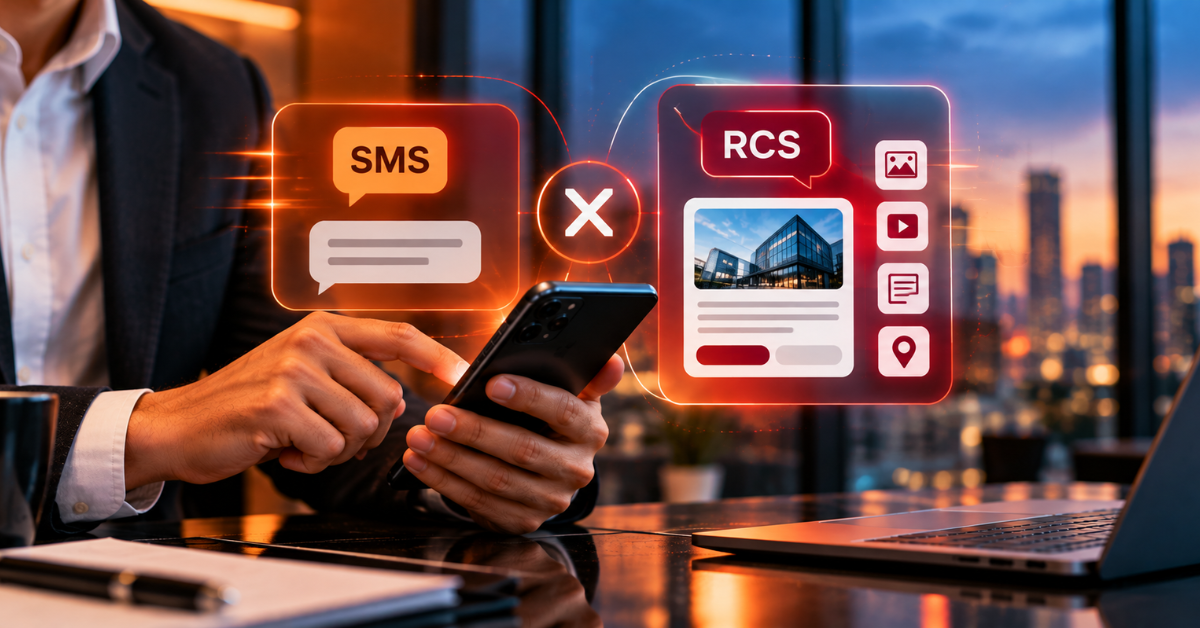
SMS x RCS: what is the difference and when to use each channel
SMS and RCS are not absolute competitors
One of the most common questions in business messaging is: SMS or RCS?
The most correct answer is that the two channels have different roles and can work together.
The SMS is simple, compliant, and straightforward. The RCS adds identity, media, and interactivity. Instead of picking a winner, companies should define which channel makes the most sense for each type of message and which fallback strategy should exist.
Practical comparison: SMS x RCS
In SMS, the experience is centered around text and links. In RCS, the experience can include rich cards, images, videos, carousels, buttons, and suggested replies.
The SMS usually has broader compatibility. The RCS depends on support from the network, the device, the system and the messaging application.
The SMS is suitable for short, transactional messages. The RCS is especially strong when communication needs to sell, demonstrate, explain, drive a choice, or allow interaction.
When to use SMS
- OTP and authentication codes, considering the company's security policy
- Quick and short alerts
- Appointment confirmations
- Billing notifications
- Delivery status
- Contingency messages
- Users or devices that are not compatible RCS
When to use RCS
- Campaigns with brand image and identity
- Offers with products and carousels
- Interactive sales journeys
- Automated service
- Service confirmation with reply buttons
- Communications where visual experience increases understanding
- Conversations that need to lead the customer to specific actions
RCS can improve the journey without forcing the customer to install another app
This is one of the great strategic differentials.
On supported devices and networks, RCS uses the native messaging app. The customer does not necessarily need to install a new app just to chat with a company.
This brings the RCS closer to an important concept for marketing and service: reducing friction.
The fewer steps there are between the message and the desired action, the greater the chance that the journey will be completed.
The best architecture tends to be hybrid
For companies with a high volume of communication, the most resilient architecture is one that does not depend on a single channel.
A journey can check compatibility and use RCS when available. When not available, an integration can use SMS or another channel, depending on the contracted technical design.
This combination allows you to work simultaneously with experience and reach.
Talk to Voicecorp
Voicecorp now offers enterprise SMS and RCS solutions for communication, service, notifications, and campaigns. Talk to our team to structure the best strategy for your operation.
0800 102 4141 | voicecorp.com.br
Official references
GSMA — Rich Communication Services (RCS): https://www.gsma.com/solutions-and-impact/technologies/networks/rcs/
GSMA — Universal Profile: https://www.gsma.com/solutions-and-impact/technologies/networks/rcs/universal-profile/
Google — RCS for Business: https://developers.google.com/business-communications/rcs-business-messaging
Apple — Difference between iMessage, RCS, and SMS/MMS: https://support.apple.com/pt-br/104972
VOICECORP business telecom
